

November 19, 2025
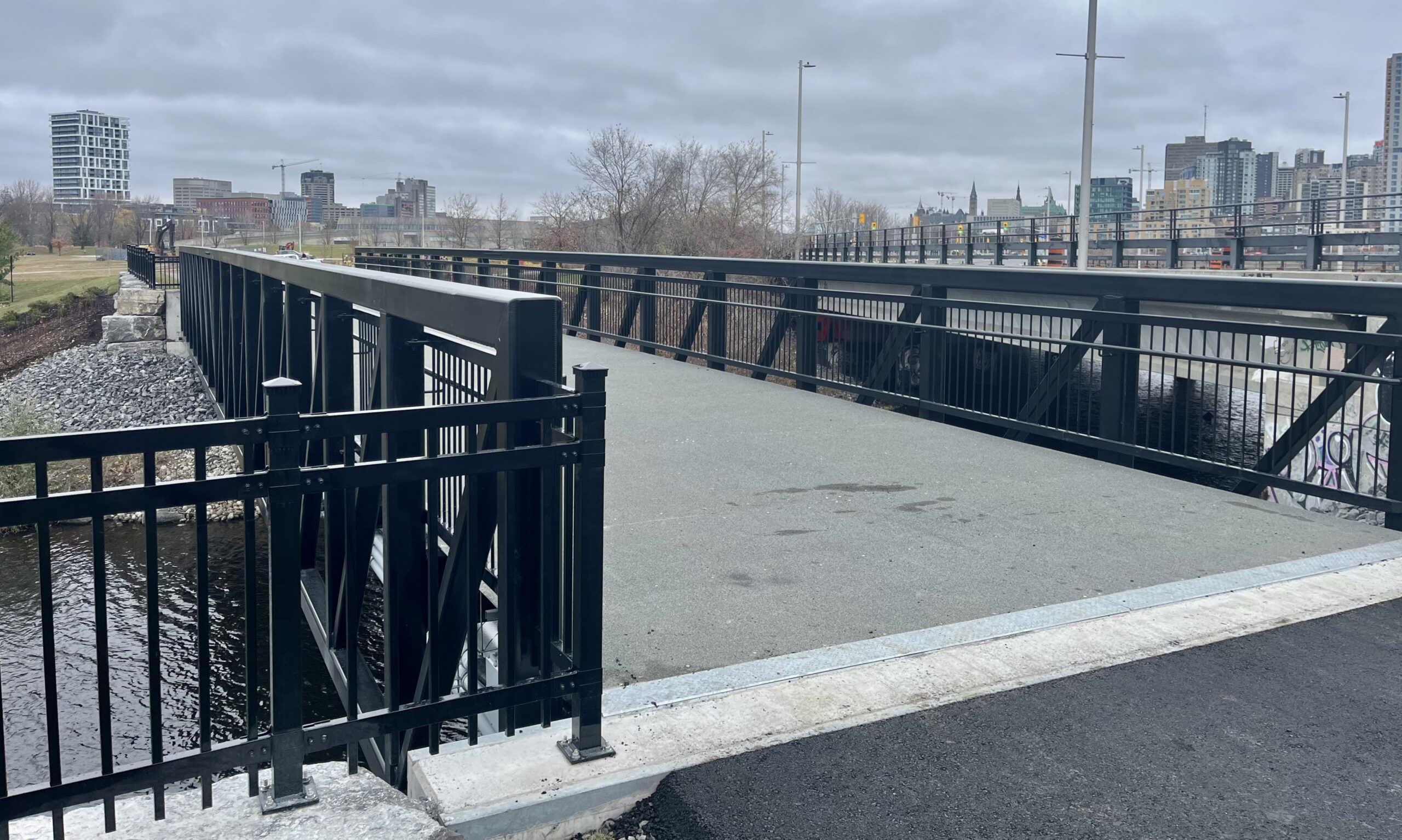
This dual-purpose bridge is in a very high-profile urban location as part of the Ottawa River Multi-Use Pathway running behind the Canadian War Museum.
The bridge was required as part of a larger energy services modernization project for the District Energy System that provides heating and services for about 80 buildings in the National Capital Region. It replaces an existing bridge that didn’t have the structural capacity to serve its current use plus carry the weight of the new utility lines.
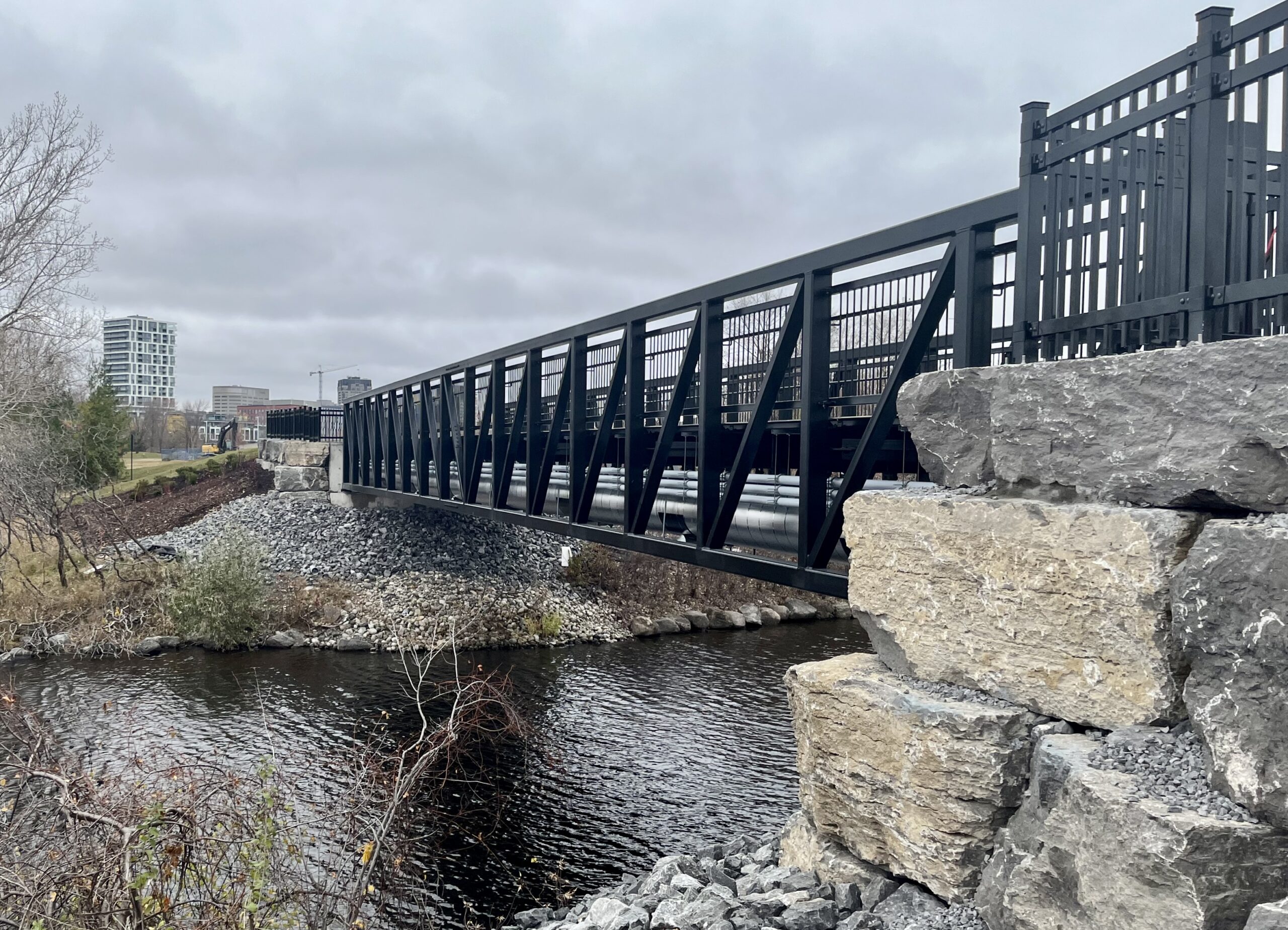
An H-section truss design allowed a natural space for the utility lines to run under the bridge deck without impacting marine clearances on the waterway below.
The Algonquin team was pleased to be partnered once again with WSP, as the consultant, and PCL Constructors, as the contractor. We supported our project partners through multiple design review/approval steps with the owner, The National Capital Commission. We also conducted weekly meetings with all stakeholders prior to receiving the order, to ensure everyone was on the same page.
Special arrangements made to facilitate deck installation
Because of the lift plan and placement of utilities, the deck had to be installed after lifting the bridge into place. This meant fastening the steel plate decking from above instead of from below, which is standard for that type of deck system. The Algonquin Engineering team came up with this solution and it saved PCL from performing work at heights from underneath the bridge. The 5 m wide decking surface consists of epoxy-coated-aggregate panels.
PCL expressed how happy they were with the project outcomes and said that they would recommend us in the future. We also expedited a late request for a certificate of conformance to help them receive payment from the owner sooner.
Many of Algonquin’s innovative bridging solutions have found homes in Ottawa in recent years, with another pedestrian/utility bridge for the Zibi development and a total of seven bridges for the OLRT expansion.